Monday, June 3, 2013

Catchin' Up

Wes and Jess:

Sorry to those of you who are avid followers (hardy har har). We've been super busy the last month with moving, and we just didn't have time to write--even when we thought about it we had to pack instead. Anyway, we decided that the best way to get back on track was to write a quick list of some things we're going to miss about New Jersey now that we're in Texas. We did a lot of complaining about living there, but there were definitely some great things about NJ and the surrounding area:


  • Diners: NJ has some of the best diners ever. Every bit of the food is awesome and there is so much you can eat it for at least two meals afterward, too. 
  • The shore: Not the stupid TV show. The real Jersey shore is pretty awesome. The water is cool and refreshing all summer long, and there are many beaches from which you can look at NYC. 
  • Pizza: Enough said. 
  • Other states: We love Texas, don't get us wrong, but it was super cool to drive an hour and be in another state. We could visit our friends Tim and Brittany, 2-3 states away, and only be in the car for three hours. Three hours in Texas gets us to a different part of Texas.
  • Bagels: Fresh-baked bagels and coffee, especially on early mornings, are freaking fantastic. We're definitely going to miss having more options than Panera.
  • History: Texas has a pretty cool history, but everything in NJ has a story (or so it seems). In downtown Crosswicks, the Friends' Meeting House had a  cannonball lodged in an outer wall. Many of the houses and other buildings are really old, some as old--or older-- as this country. People's families have lived there for centuries. 
  • Our first home: Both our apartment at Princeton and our parsonage in Crosswicks had their flaws, but these were our first homes together as a married couple and a family. So much happened inside those walls and it is strange to me that James will never remember what his first home was like. 
  • Ocean City Youth Weekend: The big gathering of youth in the New Jersey Conference that happened at the shore each September. We had a blast there all three years, with the youth from Wes' congregations as well as from all over the state. Texas is definitely not lacking in youth events, but none are like this one!
  • Jersey produce: The fresh food in NJ is really fantastic. We'll miss Ellis corn, Russo's honey and tomatoes, the random farm stands everywhere, fresh-picked apples and asparagus, and so much more. I guess we'll just have to work in the garden at our new house!
  • The people: We made some pretty good friends while we were in NJ, and it's going to be rough to have to keep in contact with them long distance only. Especially...
  • Robert, Lindsey, and Brian: Our best friends in NJ, who made living there bearable for the last three years. We got together every other week at least for the last few years, we had babies just a few months apart, and we just had a wonderful time with them. Out of everything we miss about New Jersey, the sadness of leaving them will definitely last the longest and hurt the most. 
Although we missed Texas, our friends, our family, and our life here while we did this stint in New Jersey, we're definitely going to miss some things from living up there. We certainly left a piece of our hearts up north when we left in a couple of weeks!

You stay classy, World Wide Web!

Monday, April 22, 2013

We'll Put a Boot in Your... (This Blog is Rated PG for Language)


Jess: Well, as many people have pointed out, that last week was quite a crap-fest. If you don't mind the language, The Onion had a great commentary on it. 

As I was listening to the news on the way into school today, there was a story about a “suspicious-looking man in camo” at Independence Plaza that resulted in the place being shut down and sniffed by bomb dogs for awhile. This immediately made me nervous about what is going to be happening in our nation for the next weeks and months. Fear and anger are two very powerful emotions, and I don’t think we know how to handle them very well.


Fear can be a great motivator. We talk about “fight or flight” all the time. When we’re scared about something, it causes us to take action—to protect ourselves by fleeing or to fight against that which we fear. Healthy fear causes us to do all kinds of intelligent things: we lock the doors of our houses and cars for fear of those who might wish us harm; we set aside some “rainy day” money for fear that we might lose our livelihood unexpectedly; we teach our children not to talk to strangers for fear that something terrible will happen. These are all healthy uses of fear—we can keep the fear in check through our proactive response.


But then there is the flipside of fear. There is the debilitating, heart-stopping, terrifying fear that stops us from living our lives in a normal way. This is the fear that makes parents keep their kids home from school so that they won’t run into anything negative, the kind of fear that keeps us clinging to the guns we think will keep us safe, the fear that makes us see danger lurking everywhere. This is the kind of fear that inhibits us, and the only way I have found to get past this is to pray—most of the time through tears.


The other emotion that comes out during times like this last week is anger. And again, there are two kinds of anger. First, there is the anger that comes at seeing innocent people die because of the actions of one or many others. It makes us say things like Toby Keith after 9/11: “We’ll put a boot in your ass, it’s the American way.” I know that many people, myself included, felt this way. But if we have acted upon this anger, after it recedes we are left seeing ourselves as the attackers. We end up in 12 year wars that are impossible to withdraw from. We find ourselves as individuals attacking people who look like the attackers. And there is great regret and even more destruction. This is also the anger that drove the media to cover the events in Boston for almost 24 straight hours, ignoring the other events throughout the nation and world. It's how the events in West fell to the back burner (if that)--there was no one to blame, no one in whose ass we could put our boot.


Then there is the righteous anger. Some might say the first kind falls into this category, but I see that as more “gut-reaction anger.” This second kind is different. Righteous anger sees the attackers, the perpetrators, as people—misguided people but people nonetheless. Righteous anger is what can lead us to ask for mercy for those people. It can lead us to even press for reform in our laws, our education system, our mental health awareness and treatment. It is the kind of anger that said after 9/11, “We need more security in our airports.” This is the same kind of anger that leads us to help those in need when we hear how many people in this world are without daily sustenance.


Rob Bell has a great Nooma called Store about anger that talks about righteous anger—this anger directs itself not at the one or two people who do bad things but toward the systems that lead them to those conclusions. It looks not for retribution but restoration. It is the kind of anger Jesus had when he saw the hungry, the sick, and the lonely being mistreated. It leads us to change, not to retaliation and revenge. This is the anger I have right now…the anger that makes me want to make the world a safer place for my son. The anger that says, “What about all those people in West who have been ignored because of something that happened in another part of the country?” The anger that makes me question the mass media’s coverage of a manhunt in Boston, but neglects to talk about the millions of people who will die this year due to lack of clean water or proper nutrition or terrorist attacks in their own nations. This anger does something—this is the anger that changes the world for the better.


Wes: So, this is going to be a small taste of what I talked about in my churches on Sunday, because I feel that it is extremely important to point out, and not so easy to swallow. 

Jesus called us to love our enemies.

 Those are seven words that are easy to hear during easy times, and easy to pass over when reading the Sermon on the Mount, but they can be cutting when we hear them after a horrific event like what happened in Boston this past week. They can be near-impossible to hear when men and women commit heinous acts that forever change our lives and the lives of those around us. They can be the absolute last thing we want to hear when our rage induces thoughts of vengeance and retribution that cloud any other emotion and reaction. 

But they are words we are called to follow, to live out. 


That means that German Christians during World War II was called to love Hitler. 


That means that the Father whose daughter was raped and killed is called to love her murderer. 


That means that the church in the United States of America was called to love Bin Laden and the men who crashed airplanes full of people into the Twin Towers and the Pentagon. 


And that means that today we are called to love the individuals--both deceased and in custody--who set off explosive devices at the finish line of the Boston Marathon. 


And you know what, this is ridiculously hard. Because at the same time that we are called to be a people of justice who stand up for what is right and who lift up the oppressed and downtrodden, we are called to love the very people doing the wrong, doing the oppressing, doing the downtrodding. We don't have to sit idly by while evil runs rampant, but we are also not supposed to enact violence against violence or rejoice when it is done on our behalf. 


In other words, the American way might be to "put a boot in their ass," but the Christian way is to love them through their actions, to see them as people like us--sinners desperately in need of grace. 


And this is hard. I have to tell you, when I see violence like I saw this past week, it breaks my heart. I don't just get sad, or get down about the state of humanity. I get pissed off. I get angry. It is not right. People who would hurt others should be stopped. 


I think about what it might be like if it had been one of my friends who was killed... one of my family members... my wife... 


What if James had been the little boy who died in the blast?


Would I want justice? Absolutely. Would every bone in my body be crying out for the blood of the evil-doers? You know it. Would I want to see them face the same fate as those they so mercilessly killed? Yep. But I am called to something else. I am called to love. It is sometimes very, very hard, but that does not change the fact that Christ still calls me to that love. 


So, I guess I'd ask that you join me in this struggle between justice and love, the struggle to which all Christians are called. Christ called us to love our enemies, and pray for those who persecute us. Let's pray for the Boston bombers, that God would show them the grace, mercy, and love which God has sent to us in droves. 


That's all for now. Hopefully, this week will be better. Not just here in the USA, but all around the world. We could all use an easy week. 


-wes and jess

Monday, March 18, 2013

Pope Schmope? NOPE!


Jess: You may have deduced by now (good grief, I hope) that neither Wes nor I is Roman Catholic. Therefore, it might seem silly for us to be talking about the new Pope. Yet here we are. 

As a Protestant, the Pope usually doesn't really come into my realm of thinking. But there is something to be said about what the Pope stands for beyond Roman Catholicism. The Pope, for all intents and purposes, is the face of Christianity to much of the world. There are many people who do not understand the various denominations and strands of Christian thought. What they know is that the guy in the funny hat is the leader of the Christians. So what Pope Francis I says and does speaks volumes about the rest of us, at least as far as much of the world is concerned. 

I for one am excited to see where the Pope will take the Roman Catholic church over the next months and years. There are many issues surrounding this denomination, as with the rest of the Christian church. There are scandals, issues of modernity, the fact that a pope emeritus exists for the first time in 600 years, and much more with which Pope Francis will have to struggle. And the whole world will be watching him, many assuming that he IS Christianity.

I am also fascinated by the fact that Pope Francis is the first of many things. He is the first Jesuit, which is definitely an interesting piece of Roman Catholicism. He is the first non-European pope since back in the day when many came from Africa. He is the first Latin American pope, and the first to have the name Francis. I am most interested to see how his Argentinian roots affect his papacy. Latin America is a very different place from the United States or Europe, and I would hope that this would have a profound affect on Pope Francis' concerns--especially for the poor of the world. The fact that he chose the name Francis, after Francis of Assisi, who had great concern for the poor, bodes well. Since caring for the poor is a great part of being Christian, I believe this should be a concern of all Christians, especially our leaders. I was interested to find out that, as a cardinal, he did not live in the special residence usually reserved for men of that status. 

This is definitely a new point in Roman Catholic church, as well as throughout all of Christianity. I am interested to see what happens with Pope Francis leading the world's Roman Catholics, and I pray for his ministry, as well as all of our brothers and sisters throughout the world.

Wes: When I was growing up, my dad called the bishop of our conference the Pope-on-a-Rope. Although this was never a funny-ha-ha kind of joke, it always brought a smile to my face. It also in some way helped ingrain the importance of church leaders into my young mind. Even though I am United Methodist, we, like our Roman Catholic brothers and sisters, have our own church leaders. None of them are as elevated by the denomination as the pope is, but we do have them, and they play an important role.

You see, the church is larger than just my local congregation.

Having ecclesial leaders in positions over more than just the individual congregation was one way that I first began to realize this and wrap my mind around the interconnectedness (I thought I was making up a word there, but I was wrong) of God’s church.

Ok. So we have our bishops and they have bishops, cardinals, and a pope. Why should I care about who they put in what positions? Honestly, it’s a fair question, especially in our day and age when—as globally connected as we are—much of the world is compartmentalized and cordoned off from everyone else based on status or membership in different organizations. Why should I as a United Methodist pastor give any attention whatsoever to who is the pope? Well, Jess makes a great point: the pope is the Christianity for much of the world, so we should care who wears the hat. But there’s another reason we should care as well. Whether I am United Methodist (hey, I am) or Lutheran or Southern Baptist or Roman Catholic or a part of any other Christian denomination, I am a Christian. The Body of Christ is far-reaching enough so as to encompass people of faith of myriad denominations as long as those people proclaim the Gospel and place their faith in Jesus as the Christ.

You see, the church is larger than just my specific denomination.

The church includes my current congregations of Crosswicks UMC and Ellisdale UMC. It includes my home congregation of University UMC. It includes Jessica’s current congregation of St. Bartholomew’s Lutheran Church as well as her home congregation of Rejoice Lutheran Church. It includes the congregations of the AME, American Baptist, and LCMS churches that are all about a mile from our house. And it includes the Roman Catholic Church—which, by the way, was a Christian movement LONG before the Methodists and Lutherans were ever on the scene.

We should care about the new pope—as we should have cared about the previous one—because he is a leader of the church, just like Jessica and myself (although on a much grander scale). We should care because God works through the Body of Christ to bring about the Kingdom of God, and this will absolutely include God working through our Roman Catholic brothers and sisters and their new leader in faith. We should all be anxiously waiting to see what great things come out of this office in the coming months and years, and we should join our sister denomination in celebrating God’s continuing work in their midst.

On a much different note, I feel obligated to tell you that, to my disappointment, I learned from Jessica that Argentinians do not eat Mexican food. Contrary to popular belief (or just North American belief—which included me for a long time), not everyone south of the U.S. border enjoys chips and salsa and tacos. If you, like me, were hoping that this new pope would mean more Mexican food restaurants popping up all over the world, you’ll probably be sorely disappointed…

Well, that’s it for now! Be well, our friends, and you stay classy, World Wide Web!


-jess and wes


Sunday, February 24, 2013

Playing the Waiting Game (AKA, Waiting is the Hardest Part)


Jess: I'm stressed out. There, I said it, and the first step to recovery is admitting the problem, right? Wes and I are moving three months from today and we know nothing. Nothing about what area we'll be in, nothing about what churches we'll be serving, nothing about whether one of us will have an available parsonage, nothing about whether we'll be close enough to one another to share a car, nothing about how much either one of us will or won't get paid.

Okay, I take that back. We know a few things. We know that Wes is going to have a job, and I know that's more than a lot of people in this country. We know that, one way or another, I'll have an internship. It may not be paid, and it may not be the perfect fit, but it will (most) definitely happen. We know that we'll be in Texas, the place we've been longing to return to since about 5 seconds after we left. And we know that we're going to be together as a family, doing the ministry we have been called to do.

Leaving things in God's hands has never been my strong suit. I spent years running away from a call to ministry because it was NOT WHAT I WANTED TO DO! Thank goodness I listened to the call before getting swallowed up by a big fish or tossed into the sea or some other traumatic event. But throughout this process, I have continued to struggle with "letting go and letting God." I've always been a planner--I like to know what is going to happen and when. I write my entire semester's worth of homework in my calendar the day I get my syllabus, and I already know that the first two weeks of March are going to be challenging as far as assignments go. Yet here I am, entering a vocation in which I am supposed to hand over the authority to God.

It's not as if it would technically be any different if I had been called to be a teacher, a singer, a writer, etc. Everything is God's and we are called to hand over our lives to God. We say so in the Lord's Prayer: "YOUR will be done, on earth as it is in heaven." That means, "help me to give my life over into your hands just like you have control of all that goes on in the heavens and the earth." It's a tough thing to do, though. Most of the time when we hand our lives over to God, we're doing so in the guise of humans. Although I have surrendered myself completely to God's will, I will see this play out in the choices my candidacy committee, professors, bishops, and congregations respond to me. That's tough.

In the middle of all this craziness, I realized on my way to school today that I have this unspeakable joy going on. Despite the stress, despite the nerves, despite the schoolwork piling up, I am joyful. I have confidence in the promises of God and I have faith that God will open the doors that are supposed to be opened for us. Right now, in this place of fears and uncertainty, I am finding it easy (for once) to say, "It's all up to you God. Not my will, but yours." Letting go of the control is bringing me to a deeper understanding of faith, and certainly bringing me closer to God. Trust is required to be able to hand over your life to someone--even the Ultimate Someone.

My prayer for all of us is that we may find the strength to give over our lives to God's will. My hope is that we will find unspeakable joy and peace that passes all understanding in letting go of our own desires for God's sake. For it is in the moments of uncertainty, in the scariest times of our lives, when we see God face-to-face, when we recognize God's true power and great love. 

Wes: So, I have a confession to make to y’all. I am not a patient person. I am a terrible waiter, and I’m not talking about the kind that serves food (although I’m probably not very good at that either). I can’t stand anticipation, and when I want something or am ready for something to happen, I want it to happen now. Not later. Now. This really is not a good thing, seeing as how patience is one of the fruits of the Spirit that Paul tells us about in Galatians 5. I even know I need to work on it, but the truth of it is that I simply don’t have the patience to make myself a more patient person.

Right now, though, I have found myself in a season of impatience. I have so much happening soon that I just want to get to it and move on to what the future holds! I want to have it all figured out where we are going to be living when we move down to Texas. I want to already know the church at which I will be working. My impatience has kicked into overdrive. I want these things to happen now. Can’t God just speed things up for me now that we’re so close?

Waiting is hard. I don’t like it.

Which, by the way, is why I am so glad that I am not an Israelite alive during the Exile. I don’t think I could do very well with that whole waiting all the time for the Messiah.

It’s not even that I’m worried about it. I’m not stressed out about what we don’t know and the fear of the unknown. I’m just very, very ready for it to happen.

I’ve found solace in the fact that I’m not alone. In fact, the early Apostles were pretty impatient as well. After Jesus’ Ascension, they were under the impression that He was coming back within a few days—no longer than a couple weeks at most. They quickly had to learn patience; patience far surpassing that which I would need to get over my waiting problems. I mean, they were waiting on God to come back! In 1 Thessalonians, Paul talks about the “day of the Lord” coming “like a thief in the night.” He didn’t know when, but he knew it was soon. So he cautioned the people of Thessalonica to be ready, for it would happen without even a moment’s notice. In the four Gospels, however, which were written decades after Paul’s letter, we hear of a different understanding of the coming of Christ and of God’s Kingdom on earth. It will come, but we must have patience and cling by faith to the peace of God.

So even though we are in the midst of all of this waiting, I guess it could be worse. I guess we could have no idea when we were taking the plunge, or where, or anything, for that matter. But we know a lot. We know that we are going to Texas, and that we will be within driving distance of all of the friends and family who we have dearly missed. We know that I will be guaranteed a full-time job as a United Methodist pastor (which is way more than most can count on, and I am very blessed by this), and we know that I will be commissioned in June and will be one step closer to ordination. We know that somehow, Jess will have an internship, even if it is unpaid and even if one or both of us has to commute. We know that all three of us will be together, and above all else, we know that God has a wonderful plan for us and for our ministry together.

I guess we can live with waiting for the rest of it.

Well, that’s it for us. Thanks for reading. Next time, we’ll talk about something crazy like Martin Luther’s understanding of the third use of the law or the imputed righteousness of Christ or teething rings.

For now, though, you stay classy, World Wide Web.


-jess and wes

Wednesday, February 13, 2013

Lent!


Jess: Well, it's that time of year again. It seems like it got here a lot faster than last year. LENT. That wonderful season in the Christian liturgical calendar that has many meanings and many purposes and many biblical precedents. It's 40 days of thinking about how bad we are...40 days of giving something up so we'll lose weight, save money, or some other great benefit...40 days of being sad and not saying Hallelujah (at least for Lutherans)...40 days of what? I don't think any of the above ideas are really that fantastic, but Lent is a hard thing to pin down. My personal favorite way of looking at it (this year, at least) is as a season of contemplation. It's a time to reflect on ourselves, the world, sin, etc. It's the dark night before the dawn, when we recognize our own faults, so that we can rejoice in Jesus' coming and his saving work. It is, like the whole year, a time to think about what God has done and continues to do for us.

Many people give things up for Lent. I myself have, in the past, given up sweets, TV, talking for an hour each day, and much more. I think that the purpose of giving something else has to be carefully discerned. Many people use this as a time to kind of test out a New Year's Resolution that didn't go so well. To give something up for 40 days seems doable. It's something you can count down. But that's not the point of giving something up for Lent. I'm not sure where the practice started, but I know it's not about giving something up so that you will be forced to eat healthier, thereby allowing you to lose weight. In fact, I stopped giving up sweets after the year that I lost 5 pounds over Lent. I knew that my motivations from then on would not be the right ones.
We had a professor in college who ranted against giving something up for Lent, but I wasn't really listening then. Now I realize he has some good points. If eating sweets is bad for you and you want to be healthier, just don't eat sweets. Don't try to do it out of some sort of religious obligation. If you want to learn how to watch less TV, just stop watching as much TV, don't try to make it seem like you're giving it up for Jesus. So giving something up for Lent is pretty tricky. Ever since we got married, Wes and I have been trying to do a Lenten discipline, which we see as a horse of a different color. Perhaps it's still a little cheesy or lame or not quite the point of Lent, but I'd like to think we're at least making a step in the right direction...
Two years ago, we each took on a prayerful devotion time. I read through the Gospel of Mark in Greek and reflected on it throughout the season. Wes did a prayer time while I did that. Last year, we added a Sabbath to our week--from 2 p.m. on each Saturday, we would do no homework, church work, etc. Our goal wasn't to just sit around and watch TV, either. We cooked dinner together, went on walks, spent time talking, and more. I wish we had added some sort of prayer component to it, but it was really a time of refreshment. It reminded us to slow down, that getting everything done is much easier when you include rest.
This year, we're doing something a little different. We're going to model our discipline off a book I read a couple of years ago called Not Buying It: My Year Without Shopping. I would encourage everyone to read this, or one of the many blogs about being more frugal that you can find by searching "The year without spending." We're not going to be buying anything new, going out to eat, or otherwise spending money for the season of Lent. That means no random stops for ice cream, no extra purchases when we're out grocery shopping--just the basics. The woman in this book definitely takes it to the extreme, even to the point of only buying the cheapest version of everything when she gets food. To make sure that we don't use this as a way to just save money for ourselves, we're going to donate the money that is normally allocated in our budget to this kind of stuff. I'll let Wes talk some more about our plans, because I've been going on too long already!


Wes: So everyone knows that Lent is that special time of year when you give up something you love as a sacrifice to Easter Bunny so that he brings you delicious chocolates and eggs containing a small amount of pocket change. In the olden days, Lent was first observed by entire communities sacrificing all of the young men and women who had reached the coveted age of maturity. Adolescents of both genders joyously threw themselves into smoldering volcanic pits while the elderly and the young cheered from a safe distance away. When whole civilizations were wiped out due to illness and the fact that no one was procreating, neighboring aborigine societies decided that it might be within their best interests to instead give up chocolate and Facebook for a forty-day span. The dreaded Rabbit of Resurrection accepted this paradigm shift, and the ritual has remained unchanged for millennia. 

So, with the weight of thousands of years of tradition bearing me down, here is a list of items that I have given up for Lent in the past:

  • Soda.
  • Chocolate and other forms of candy.
  • Facebook. 
  • Pizza.
  • Gum. (This one was particularly hard because at the time I was utterly addicted to rubber)
  • Ice Cream. 
  • All forms of dessert. 
  • Video Games.
  • School. (This one was vetoed almost immediately by the powers that be--my parents)
  • TV
  • Multiple combinations of some/all of the above.
During my senior year of high school, I decided to try something different. A friend of mine covenanted with me to spend each Wednesday lunch period in one of the band practice rooms. We would fast during the lunch hour and pray for every student, faculty member, and staff member of the school. After having to pass a background check and go before the school board to promise that I did not want the names for any maligned purpose, we set out on our mission. My friend didn't last the entire time, and to be honest there were certain days when I would sneak a bite of a granola bar before dinner, but we tried our best, and I can personally attest that every person in the school was prayed for by name at least once during that 40-day span. 

It was a wonderful experience for me, and it led to a shift in how I understood and approached Lent. From that point on, I've tried to either add something new and exciting like this prayer experiment or at least tried to make sure that when I do take away something for Lent, I replace it with something awesome, like intentional prayer time anytime I feel the itch to update my status.

This year will be challenging. There are times when I just really want a Starbucks drink or a fountain soda. But I'm going to try my hardest to live as simply as possible--not just to cut out the extra fluff from my life, but because I'm hoping that it helps me see just how much I have and how blessed I am. I know that I take much in my life for granted, and that I rely on the extravagance of my middle-class situation much more than I rely on the extravagance of my God. I want to change that. 

I hope that this will end up being a wonderful experience for Jess and I, and I hope that in some way it continues even after Lent, that we might live simply in our extravagance, and give God all of the glory for the things we so often and so readily take for granted. 

So whatever you do for Lent, I pray that it is a meaningful experience for you. I pray that you'll be able to see it for what it is--a discipline--and I pray that God will be blessed by you through it while God blessed you through it. 

Also, Happy Ash Wednesday!

You stay classy, World Wide Web!


-jess and wes

Friday, February 8, 2013

Tipping: It's Not Just a City in China


Jess: So Wes and I have been discussing this "pastor" who refused to tip his waitress http://consumerist.com/2013/01/29/diner-thinks-that-saying-hes-a-pastor-allows-him-to-stiff-waiter-on-tip/. Apparently this guy doesn't need to tip his server because he gives God 10%, and no one else deserves more than that.

Geez, this is so wrong on so many levels. I'm so beyond frustrated to see something so ridiculous cruising the internet and giving people yet another reason to hate Christians. We really suck sometimes, right?

First of all, this guy is saying that a tip is somehow equal to tithing. Wrong. Tithing (for you non-churchy people, that's the fancy word for giving 10% of your income to the church) is something we do out of gratitude to God. There are a few biblical justifications for the giving to be 10%, but the general idea is that we give back to God. But, with the exception of the sacrifices of the firstborn animal, grain, etc. from the Old Testament, this tithe wasn't ever really given TO God, precisely. Even most of the sacrifices were presented in some way before God and then actually used by the priests. The priests received their food from the offerings of the people. God has no need for food or drink, but the priests certainly did.

The point of the tithe is not that I'm giving 10% TO God, but that I'm giving 10% of the gifts with which God has blessed me so that they may be a blessing to others. In modern times, this still frequently means supporting the pastor with their salary, housing allowance, etc. But this money also goes to the other work of the church-- serving God's people. A tithe is not something we give to God because God needs it. Giving the tithe is an acknowledgement that everything we have is already God's. It's a way to say thank you. But like I said before, God doesn't need our money, food, time, whatever--those are already God's to begin with. God calls us to share these things with others, to care for the rest of creation because God loved and cared for us first.

The second (and final, because I'm ranting) point I will make is about how this guy treated the poor server. We are reminded repeatedly throughout the Bible of how God has taken care of us--from the Israelites that God rescued from slavery in Egypt, to our salvation through Jesus' death on the cross. And God calls us to care for others because he first cared for us. 1 John 4:19 says, "We love because he first loved us." This is one of my biggest problems with Christianity as an institution today. We hear so much about how cruelly Christians treat one another and especially those that they consider to be "outside" the faith. And almost none of it is good. Good deeds seem to always come from outside of Christianity, while Christians, the ones who are called to spread the message of love, are best known for our hypocrisy. Ouch. This guy is a great example of that.

Our tithing is supposed to be a way to thank God. So I can almost see how he can equate the tip with the tithe. We are thanking our server for good work. But, as I said about a million times above, God doesn't NEED our money. Someone who is working at or below minimum wage (because of whatever crazy system they have worked out for servers) NEEDS that money! Even if they're having a bad night--we should give them the benefit of the doubt. THAT'S the kind of message Christians are called to share. I'm sure we wouldn't have heard much about it, but what if this "pastor" had instead tipped above and beyond the 18%, writing a note about how he remembers being a server, and how he hopes that the server has a great day. But no, he's too busy complaining about a perfectly legitimate tip being automatically added to his tab when he brought a large party. What a jerk. So now the country is in an uproar about this "pastor's" actions. And once again the Gospel message is lost in someone's inability to see Christ in the other.

Wes: “And this is how the world will know that you are my disciples: if you love one another.”

Jesus said this to his disciples. It is recorded in John 13:35.

Earlier, when asked what the greatest commandment was, Jesus answered by saying, “Love the Lord your God with all your heart, soul, strength, and mind. The second one is like it: love your neighbor as yourself.”

Something is wrong when our relationship with and faith in God can be used a bludgeon to others. It goes against everything that Jesus stood for, and completely misses the point of the Christian life. Now, Jess did a wonderful job speaking of tithing and of how the call of the Christian is so much more than simply writing a check to God for 10% of our annual income. I’ll let her words stand alone in this aspect. But something else from this really caught me off guard, and really disappointed me: there was no love in this. Even if that 18% gratuity was high (which I absolutely do not believe to be true), this pastor acted out of anger and self-righteousness instead of out of love, and this is just sad. I feel so bad for this waitress, who did not see Jesus in this pastor that night and who ended up losing her job because of the “embarrassment” she caused this clergy person.

I also feel bad for the pastor, who has completely missed the point of what it means to give to God. If I ever heard a parishioner say that they gave 10% to God and that was enough, I’d probably try to use the occasion as a teaching experience, a chance to show them that the call on our lives is not to give God 10% of our income but to give God 100% of ourselves. Tithing (and the many other ways in which the Ancient Israelites were called to give to God, which actually totals to about 33% of one’s income) was a way to allow each person and family to take part in the work that God’s people were doing in the world. It fed and clothed the priests who served as mediators between Creator and created. It built the Tabernacle and later the Temple, both of which served as focal points of worship for the people. It was not a clear-cut tax that would be weighed and measured by authorities, but was a way to include all in the work of the Lord. This pastor obviously missed that, and I feel bad for her and for those who are not hearing this vital truth of Scripture at her church.

I hope that my friends outside of the church do not judge all of us by such acts like this. I wish I could say that they are few and far between, but that’s not exactly true, is it? The body of Christ needs to step up and do a better job of loving. Right now (and I admit that I speak only from my perspective), we are missing out on chance after chance to love others, and I sincerely doubt that the world would say that they know us first and foremost by our love.

Let’s step it up, friends. Jesus set out a pretty steep challenge. Let’s rise to meet it.

And come on. Tip your servers. They’re earning every penny, and even if they’re not, they probably need it just as much as—if not more than—you do.

Stay classy, World Wide Web.


-jess and wes
Tuesday, January 29, 2013

The Metheran Child

Disclaimer from Wes!--Jess wrote her part of the blog like... three weeks ago. I, on the other hand, was too busy spending time with James, whom I obviously love more. So, three weeks later, I am now ready to write my part. She loves James more at this particular moment...

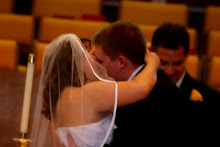
Jess: How are we going to raise James as a good Metheran? Many people have asked us this or similar questions. Well, let's start with two weeks from now. We're going to get up on Sunday morning (in Texas) and go to Wes' home church, University United Methodist in San Antonio. And then I'm going to let the Methodists baptize my son. And you know what? That doesn't mean he'll be any less Lutheran--or any more Methodist. One of the greatest things about the relationship between our two denominations is that we fully recognize the sacraments of the other church. Once we're ordained, Wes and I are even allowed to perform the sacraments at the other church. There are very few things that make us different, and baptism isn't one of them. In fact, the words of the sacrament are almost identical in each hymnal. 

When we were talking about James' baptism, we talked a lot about how we were going to raise him and be equally fair to our churches. This is a relatively simple problem in some ways--definitely not like my stepsister and stepbrother-in-law, who are trying to raise their daughter as a "Jewtheran." The first challenge for us, especially while James is a baby and doesn't really know what's going on in church, was when, where and in what denomination to have him baptized. We had a long discussion over many weeks--maybe months--about this issue. The biggest question was where, but not in relation to the church so much as the state! 

My family lives across the northern part of the country: us in NJ, Mom in Ohio, Dad in Michigan, and Josiah in Illinois. If we had the baptism here, some of them might have made it, depending on the timing. Then we would have had to determine which church. Wes can do a baptism, but we discussed that and decided that this is a situation in which we should just be the parents. That's a big enough responsibility, without being the one to perform the baptism. So would we do the baptism in one of Wes' churches with another pastor? Which one of the churches? Would we have one of my field ed supervisors do the baptism? Which one? On what Sunday? Should we ask my dad to do it? Where would we do it? Michigan? Here? No matter what, someone was going to be left out, and that didn't seem right. We settled on Texas, and that immediately meant doing the baptism at Wes' home church, since I don't have a church home down there. In fact, I spent more time in Methodist churches than Lutheran ones when I lived there--although we DID go to a Lutheran school.

So there we were, considering using University as the place for James' baptism. We finally decided this was the best choice when we talked about our theology of baptism. First, we both believe that there is nothing we as the parents, James as the child, or the pastor actually DO in the course of baptism. Everything that is done has already been done through God in Christ. So in that way, it really doesn't matter who does the baptism, except for our personal reasons. But what does matter is where the baptism is done and who is present. Both of our liturgies and theologies speak of the community that will raise the child in the church. Since we'll be living in Texas for the foreseeable future, this means that the community that will help raise James is our friends and family down there. This is not to say that my family and our friends up here will not, but they will not be in immediate contact with him all the time. So it was decided for us, in a way. We had to have the baptism where the majority of these people could come and make the promises to help raise James in the church. Plus, our friends Ryan and Kelli are going to be his godparents, and they live in Texas. 

It seems like a lot of discussion and time spent trying to figure out where to do something as "simple" as a baptism, but I think this is how many of our decisions in James' religious life will go--at least until he is old enough to make some of these decisions for himself. Who knows? Maybe he'll be confirmed in an Episcopal church and married in a Presbyterian one. That's fine with us!


Wes: Wow, Jess sure is good at explaining things. I think she covered the baptism pretty well, so I'll try to move on to other aspects of how exactly we are planning on raising James (and any/all siblings that may/may not arrive in the future) in a way that both blesses God and is true to both of our denominations. 

But first, let me say: the baptism was amazing. James did not cry or fuss or anything. He was a tiny little baby angel in Pastor Laurinda's arms, and we joyfully celebrated the opportunity to invite him officially into the family of God. 

But what happens after the baptism? How are we going to decide which church to raise him in, which nursery to send him to, where he will do confirmation, and which youth group he will attend? Well, we have a pretty complex, algorithmic equation to ensure that everything is as balanced as possible.

Would you like to know what it is? Ok I'll tell you: We decide based entirely on convenience and then he/they decide based on what he/they prefer. 

Boom. There it is. 

The Methodist Church and Lutheran Church are so close enough in doctrine and even in practice that we have no problems or worries whatsoever on which church our children attend for each milestone in their faith lives. Honestly, we're more focused on making sure that they want to go to church at all, and much less worried about which one that is. As long as the church confesses Jesus Christ as Lord and welcomes all to God's table, we are more than open to them attending wherever it makes the most sense at the time for them to attend and then worshipping wherever they want to worship when they grow old enough to decide for themselves. 

And, of course, they'll always choose Methodist, because we're awesome. 

Right now, James is going to church almost without exception with Jessica, but this is much more because she is able to watch him than it is about a theological decision. I have to lead worship and preach, and she is able to sit in the pew with him. I'm sure that if we find ourselves ever in a situation where one of our churches has a nursery and one doesn't, that will just about seal the deal for us on where he goes. We're also very willing to switch him back and forth for a while if the opportunity presents itself. 

So that's the plan. That's how our little Metheran family will function for the time being. 

Until we all become Methodist... 

;)

For now, though, you stay classy, World Wide Web!

Jess and Wes